Special Deals!
Our Biggest Savings YetReceive Special Pricing In Cart! Use Coupon Code: AAED200
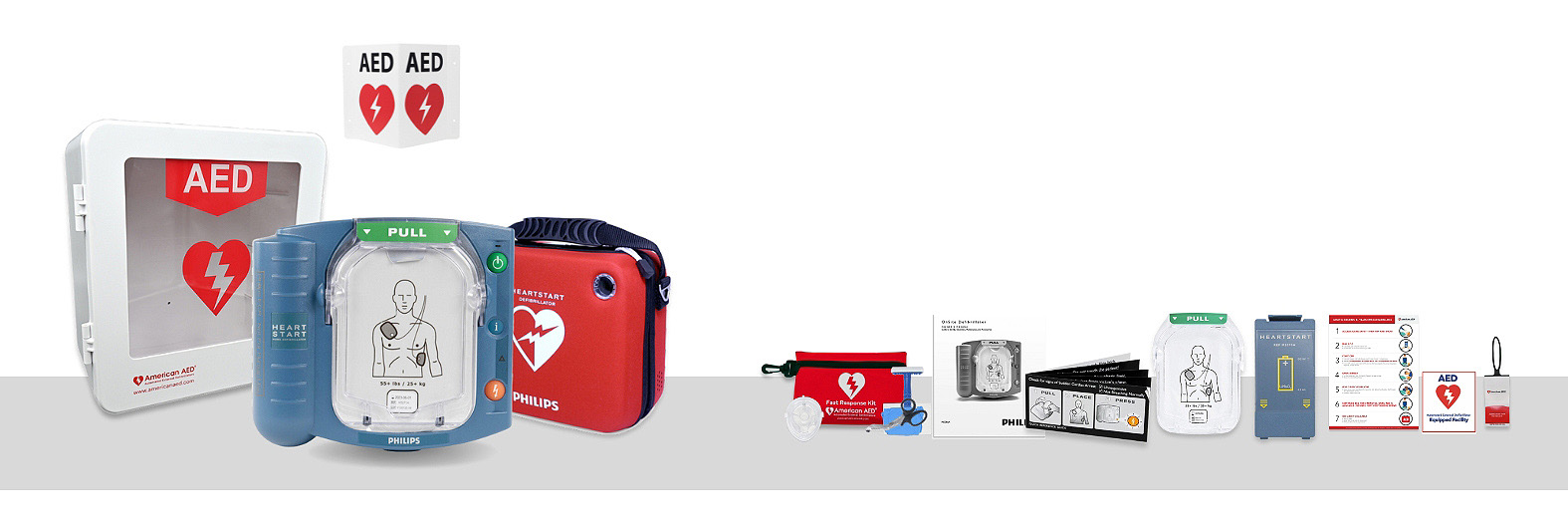
Philips Business / Office / Workplace / Corporate Package
Your Complete Business AED Package Includes:
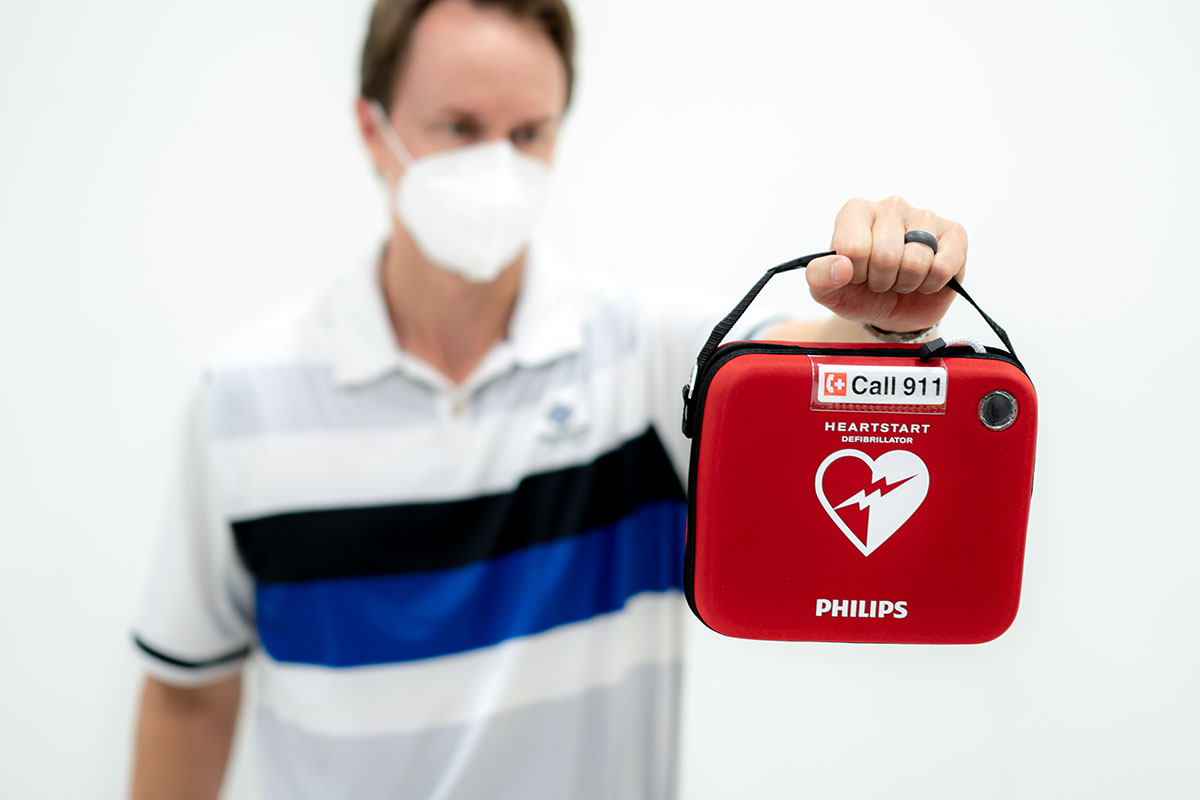
A brand new Philips HeartStart Onsite AED unit with an 8-year warranty, 1 pair of adult Smart Pads, 1 battery with a 4-year warranty, a user manual, and a quick guide.
Additional Benefits for Packaging Include:
- HeartStart OnSite Carrying Case
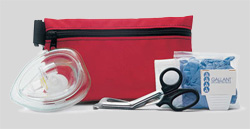
- Premium AED+CPR Responder Kit ($50 value)
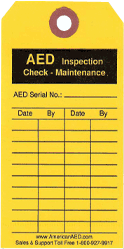
- Inspection / Maintenance Tag
- Premium AED Storage Wall Cabinet
- Double Sided Flanged AED Sign
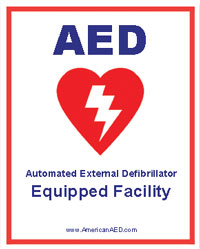
- AED “Equipped Facility” Decal / Sticker
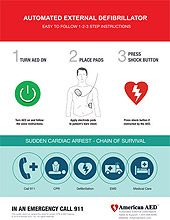
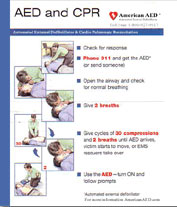
- American AED Instructional Wall AED Poster
- FREE FedEx Ground Shipping
#1 Best Seller - Buy Now!
From $1,549.00
Use coupon AAED200 at checkout and see savings in cart.
Only Available At American AED
Your Complete Package Includes Everything you need to set-up your own AED station.
Includes a Wall Cabinet and Double Sided AED Sign to store, display, and quickly locate the AED when needed.
Note: If your organization has young children, 8 years old or younger and/or 55lbs and under, consider adding a set of infant / child smart pads. (Adult pads are used for adults or children 8 years old and older and/or 55lbs and OVER. Infant / child smart pads are for children 8 years old or younger and/or 55lbs and UNDER)).
Customer Reviews
AEDs in The Business / Workplace
Studies indicate that in the United States, there are over 450,000 cardiac arrest related deaths—killing more people than car accidents, breast cancer, fire, and AIDS combined. Unlike heart attacks, sudden cardiac can affect people of all ages, sex, and health status. The use of an automated external defibrillator (AED), administered as soon as possible, is the only effective treatment for sudden cardiac arrest. The American Heart Association strongly recommends businesses and corporations implement life-saving AED programs to increase the chances of survival for their employees who have heart-related emergencies. With an AED program, a person will be better prepared to save the life of a colleague, friend, or supervisor.Does Your Company Have an AED Program in Place? AEDs in the Workplace Save Lives
Here are some of the reasons companies should invest in Automated External Defibrillators in the workplace:- Defibrillation within 3 minutes of sudden cardiac arrest increases chances of survival by 70%.
- Defibrillation within 1 minute of collapse increases the chances of survival by 90%.
- The delay in treatment caused by waiting for emergency responders (approximately 9 minutes) could result in death. 95% of people who experience sudden cardiac arrest die as a result, mainly because of delay in treatment.
- OSHA recommends having AEDs in the workplace.
- Many insurance companies now offer rate reductions on liability insurance if AEDs are provided in the workplace.
- Workers can be easily trained to: recognize sudden cardiac arrest and notify EMS professionals, perform CPR, provide early defibrillation with an Automated External Defibrillators, and care for the victim until EMS personnel arrive.
Companies Big & Small Use Our AED Business Package
From mom & pop small businesses to Fortune 500 companies, we have equipped thousands of employers with life-saving AED devices to protect their employees. Click here to see a list of some of our customers.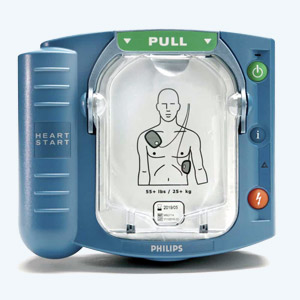

American AED Business Package – AED Unit Details
Modern. Simple. Easy to Use.
Activate & Rescue Intuitive and User-Friendly
The Phillips HeartStart OnSite AED helps to eliminate concerns that a layperson and nonmedical personnel might have regarding rescue. Voice commands and diagrams guide users seamlessly with concise instructions that are easy to follow, including how to:- Attach the OnSite SMART Pads
- Be Rescue-Ready, if shock rescue is required
Built-In Life-Saving Elements SMART Biphasic Therapy
The user can safely administer a rescue shock thanks to SMART Biphasic Therapy. By deploying a high current in combination with a lower energy dose, the innovative Philips therapy is designed to help minimize potential side effects and/or risks to the heart.Guided Survival Steps CPR and Shock Therapy
Providing CPR for an individual in crisis is essential to the rescue process. Shock following chest compression is the next step. The Philips HeartStart OnSite AED includes a Quick Shock feature to help minimize chest compression interruptions and shorten the time it takes for the defibrillator user to call for “hands-off” and perform rescue/shock delivery.Show and Tell Voice Cues: Calm in Crisis
Included with the easy-to-understand voice cues is a visual helper that is self-explanatory — a diagram of the upper torso that guides the user where to correctly place the Onsite SMART Pads on the bare chest of the individual in crisis.AED Coaching at Your Pace Aligned with the User’s Action
The voice cues of the Philips HeartStart Onsite AED are delivered in an easy-to-follow manner that is calm, clear and concise. These instructions also stay in pace with the user in order to go step-by-step with rescue and CPR instructions.Rescue-Ready 24/7 AED Self-Tests Internal Circuitry
The Philips HeartStart OnSite AED is designed to evaluate itself to ensure it is properly function through daily, weekly and monthly test cycles that evaluate its internal circuitry—conducting 85 tests—including evaluating the lithium battery and Onsite SMART Pads.Heart Rhythm Assessment Life-Saving OnSite SMART Pads
The step-by-step directions help the user to understand how to place the OnSite Smart Pads on the individual in crisis. Once in place, the heart rhythm assessment is programmed to determine whether to rescue/shock or not to rescue/shock.Patented Quick Shock Fast Rescue Deployment
Philips HeartStart Onsite AED is a leader for delivering rescue/shock treatment after CPR in just eight seconds.Infant/Child SmartRecognizes Infant/Child OnSite SMART Pads
The Philips HeartStart Onsite AED recognizes when the Infant/Child SMART Pads are installed and automatically lowers the defibrillator level. It also automatically changes the voice prompts to provide the user with CPR instructions for an infant/child.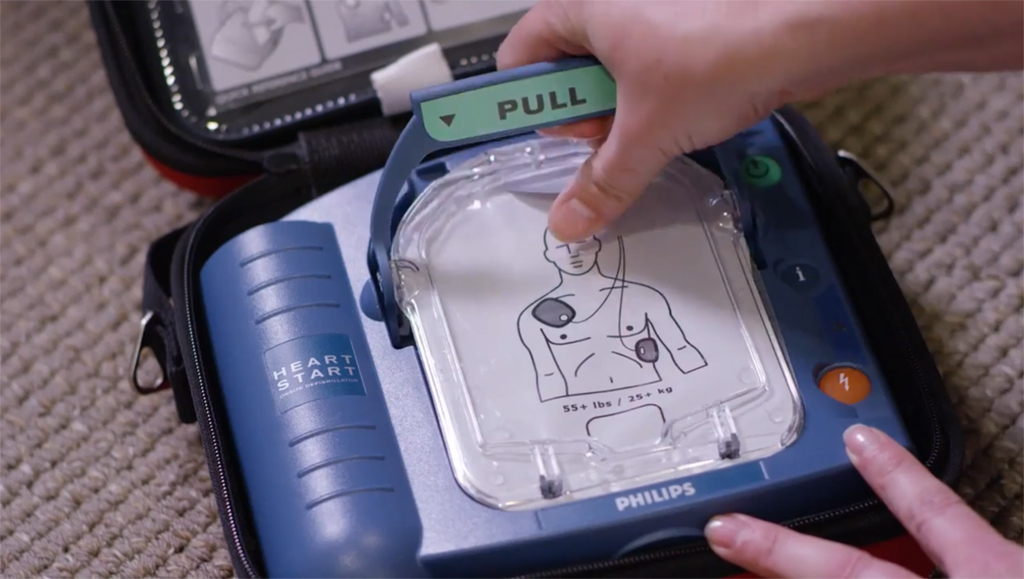

AEDs for COVID-related Cardiac Arrests
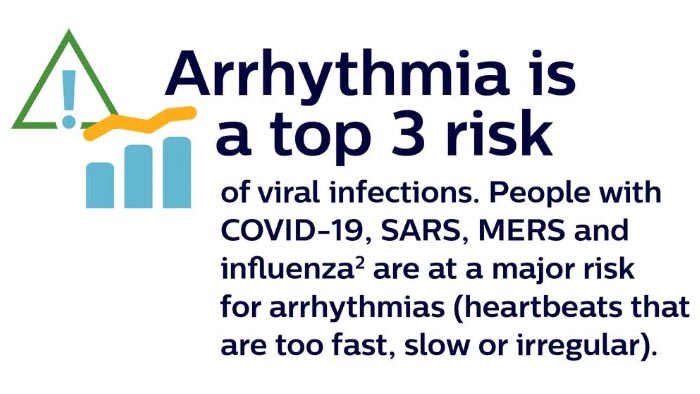
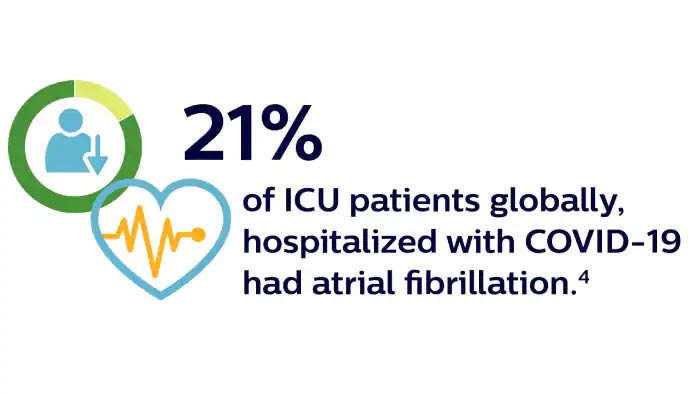
Be prepared for a surge in cardiac arrests related to COVID-19
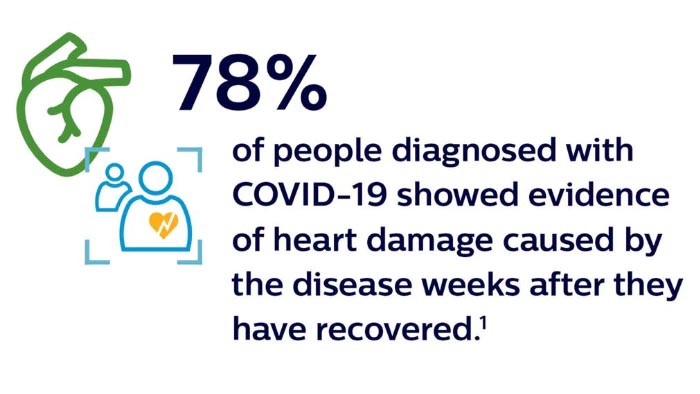
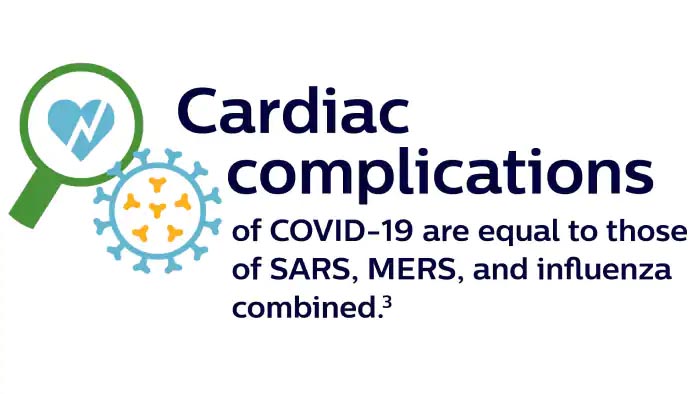
As quarantine orders are lifted and people start to resume their normal activities, Philips is focused on protecting community members who have leftover heart damage caused by COVID-19. Having a Philips HeartStart OnSite or HeartStart FRx AED on hand gives added peace of mind for people with compromised hearts.The statistics below illustrate how COVID-19 can affect weakened hearts.
Business Workplace – Frequently Asked Questions
What is an AED and when is it needed?
An automated external defibrillator (AED) is used to deliver an electrical shock to the heart (defibrillation) of a victim of suffering from the most common cause of sudden cardiac arrest (SCA). Sudden cardiac arrest occurs when the heart’s electrical impulses suddenly become chaotic, causing the heart to abruptly stop pumping blood effectively – known as ventricular fibrillation. The victim becomes unresponsive, has no detectable pulse and stops breathing. The only definitive treatment to restore an effective heart rhythm of the most common cause of SCA is defibrillation.Does sudden cardiac arrest really happen in the workplace?
Yes – sudden cardiac arrest can strike virtually anyone—man or woman, young or old – anywhere, anytime and often without warning. In fact, 13 percent of workplace fatalities are from sudden cardiac arrest. Many factors in the workplace can increase the risk of SCA or limit the timely delivery of potentially lifesaving defibrillation therapy:- An aging work force, particularly in industrial companies;
- Work sites with high voltage equipment;
- Urban locations, which may be difficult for emergency responders to reach due to the need to negotiate traffic, staircases, elevators, escalators or crowds of people;
- Industrial campuses that may have tight security controls or spread out facilities;
- Relatively remote locations, which may result in longer response times by emergency medical services.
If sudden cardiac arrest occurs at work, isn’t it the responsibility of emergency medical services (EMS)?
Helping to save lives is a shared responsibility. A corporation’s “in-house” emergency response program should complement, not replace, the existing 9-1-1 structure. Working in partnership with EMS, a company’s first responders can help keep a victim alive for EMS personnel to treat when they arrive. Training employees in cardiopulmonary resuscitation (CPR) and the use of AEDs can minimize time-to-defibrillation when every minute counts. For the best chance of survival, a shock to the heart should be delivered within the first 5 minutes. The likelihood of successful resuscitation decreases by approximately 10 percent with every minute that passes. After 10 minutes without defibrillation, few attempts at resuscitation are successful. Sadly, the average response time for emergency medical services in a typical community is nine minutes. AEDs can be strategically placed within a workplace, similar to the convenience of fire extinguishers, so that responders have immediate access to this potentially lifesaving equipment.Why should corporations purchase defibrillators?
Studies demonstrate dramatic increases in survival as a result of the broad deployment of defibrillators. The American Heart Association estimates that 40,000 more lives could be saved annually in the U.S. alone if defibrillators were more widely available and could reach victims more quickly. Additionally, in December 2001, the U.S. Department of Labor Occupational Safety and Health Administration (OSHA) issued an advisory statement to urge employers to deploy defibrillators in the workplace. Considering that people spend the majority of their time at work, school or within their communities, the broad availability of defibrillators within these locations offers tremendous potential to save lives. Early defibrillation programs established in shopping malls, airports, businesses, health clubs, casinos, and across entire towns and cities have already been successful in saving lives from sudden cardiac arrest. According to a 2003 survey of workplaces by the American College of Environmental and Occupational Medicine (ACOEM), 34% of those who have implemented an AED program have used their AED at least once in order to help save a life.Are AEDs expensive?
Through technological advances in defibrillation design, circuitry and battery technology, purchasing an AED for your corporation is very affordable. Philips HeartStart Defibrillators with supplies can now be purchased for less than $1,500.00.How safe are AEDs?
AEDs are designed to deliver a shock only to someone who is suffering from the most common cause of cardiac arrest. When used properly and with appropriate precautions, AEDs are very simple to operate and pose no risk to either the rescuer or the victim.Who in our company would use the AED?
Philips HeartStart Defibrillators require minimal training. Safety officers, on-site physicians and nurses, security guards, office and industrial workers have all safely used Philips HeartStart Defibrillators. Philips provides comprehensive training solutions through a network of qualified training organizations to assist with preparing employees to use AEDs.Is maintenance time-consuming?
Philips HeartStart Defibrillators have long-life batteries and perform comprehensive daily, weekly and monthly self-tests to help ensure readiness. Visual and audible status indicators allow responders to immediately see whether the device has passed its last self test and is ready for use.Is there an increased risk of liability for using an AED?
All organizations should evaluate the relative risks and benefits when considering the implementation of any program that affects employee welfare. According to the American Heart Association, to date, no known judgments have been rendered against the operator of an AED for negligent or improper use of AEDs. According to an article on AEDs and legal liability published in Air & Space Lawyer (a publication of the American Bar Association), “liability claims associated with the negligent operation of AEDs are mitigated by the difficulty in establishing that the operator proximately caused harm to the victim…The AED operator is attempting to resuscitate an individual who, absent the AED, will likely remain dead.” By contrast, recent news indicates that corporations may face liability for failing to have an AED available to treat a victim of sudden cardiac arrest. For example, in June 1996, a Florida jury found Busch Gardens negligent for not properly training its employees to provide emergency care and for failing to have essential medical equipment, including a defibrillator, on the premises. The plaintiff was awarded $500,000 in damages for the death of her teenage daughter at the amusement park. The Cardiac Arrest Survival Act passed by Congress in 2000 provides a model that states could adopt to encourage widespread use of AEDs and other lifesaving devices and provide immunity for those who give emergency care. And Good Samaritan laws enacted by nearly every state enable a range of non-traditional emergency responders to use AEDs. In further support of these legislative efforts, Philips offers customers an indemnification program to protect Philips AED users. In summary, the benefits of AEDs, the relative manageable cost of implementation and the lack of other effective treatment alternatives can present a compelling argument that corporations and other organizations might have a duty of care toward their employees, customers, patrons, etc. who may suffer sudden cardiac arrest. Failure to purchase and use AEDs could conceivably subject these corporations to an increasing liability risk in this rapidly evolving legal arena.My company needs to purchase several AEDs, do you have discounts for bulk orders?
Yes, if your company is ordering more than (1) AED Business package contact us at 1-800-884-6480 or [email protected] for a customized quote.Videos – HeartStart OnSite (M5066A)
Philips HeartStart OnSite Documents & Brochure
Brochures & Datasheets
For Philips OnSite AED Users
Accessories
AED Decal-Sticker AED Equipped Facility
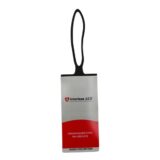
AED Inspection Maintenance Tag (5 Pack)
AED+CPR Responder Kit Premium Kit with Carry Pouch
The Premium AED+CPR Responder Kit Contains: 1 Zippered Red Carry Pouch 1 Clear Mouth-To-Mouth Barrier 1 Pair Of Nitrile Gloves … Read More
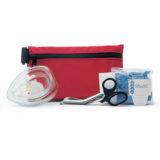
The Premium AED+CPR Responder Kit Contains: 1 Zippered Red Carry Pouch 1 Clear Mouth-To-Mouth Barrier 1 Pair Of Nitrile Gloves … Read More
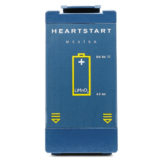
Philips HeartStart FRX
External Manikin Adapter – M5089A
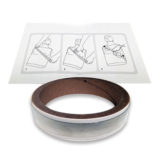
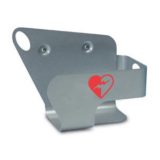
Philips HeartStart Hard / Waterproof Case – 989803110251
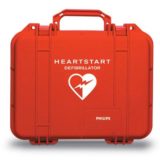
Philips HeartStart OnSite
Adult Pad Placement Guide – M5090A
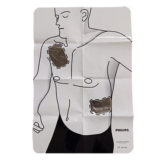
Philips HeartStart OnSite
Adult Practice Cartridge – M5073A
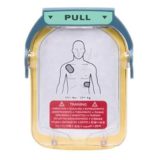
Philips HeartStart OnSite
Adult Smart Pads – M5071A (Short-Dated)

Philips HeartStart OnSite
Adult Smart Pads – M5071A
Philips HeartStart OnSite
Adult Training Pads – M5093A
Replacement training electrode pads (Adult). Note: For use with Adult Practice Pads Cartridge Part #: M5073A and the Onsite Training … Read More
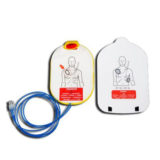
Replacement training electrode pads (Adult). Note: For use with Adult Practice Pads Cartridge Part #: M5073A and the Onsite Training … Read More
Philips HeartStart OnSite
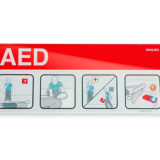
AED Awareness Sign Placard – 989803170901
Philips HeartStart OnSite
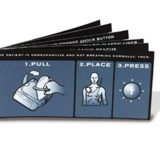
AED Quick Reference Card – M5066-97800
Philips HeartStart OnSite
Child Pad Placement Guide – 989803139281
Great for training simulations, the Philips Adult Pads Placement Guide shows the precise points on the child victim’s body to … Read More
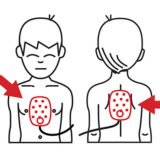
Great for training simulations, the Philips Adult Pads Placement Guide shows the precise points on the child victim’s body to … Read More
Philips HeartStart OnSite
Complete AED Package
Your Complete AED Package Includes:
A brand new Philips HeartStart Onsite AED unit with an 8-year warranty, 1 pair of adult Smart Pads, 1 battery with a 4-year warranty, a user manual, and a quick guide.
Additional Benefits for Packaging Include:
- HeartStart OnSite Carrying Case
- Premium AED+CPR Responder Kit ($50 value)
- Inspection / Maintenance Tag
- Premium AED Storage Wall Cabinet
- Double Sided Flanged AED Sign
- AED “Equipped Facility” Decal / Sticker
- American AED Instructional Wall AED Poster
- FREE FedEx Ground Shipping
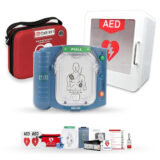
Your Complete AED Package Includes:
A brand new Philips HeartStart Onsite AED unit with an 8-year warranty, 1 pair of adult Smart Pads, 1 battery with a 4-year warranty, a user manual, and a quick guide.
Additional Benefits for Packaging Include:
- HeartStart OnSite Carrying Case
- Premium AED+CPR Responder Kit ($50 value)
- Inspection / Maintenance Tag
- Premium AED Storage Wall Cabinet
- Double Sided Flanged AED Sign
- AED “Equipped Facility” Decal / Sticker
- American AED Instructional Wall AED Poster
- FREE FedEx Ground Shipping
Philips HeartStart OnSite
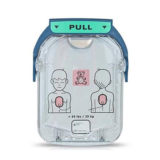
Infant / Child Smart Pads – M5072A
Philips HeartStart OnSite
Infant/Child Practice Cartridge – M5074A
Turn your HeartStart OnSite™ into a training unit. Complete with instructions and the Infant/Child Pad Placement Guide (included). Infant/Child Training … Read More
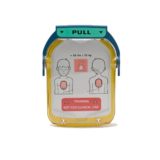
Turn your HeartStart OnSite™ into a training unit. Complete with instructions and the Infant/Child Pad Placement Guide (included). Infant/Child Training … Read More
Philips HeartStart OnSite
Infant/Child Training Pads – M5094A
Replacement training electrode pads (Infant / Child). Note: For use with Infant / Child Practice Pads Cartridge Part #: M5074A
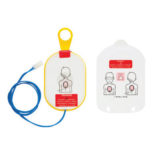
Replacement training electrode pads (Infant / Child). Note: For use with Infant / Child Practice Pads Cartridge Part #: M5074A
Philips HeartStart OnSite
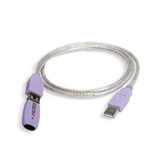
Philips Infrared Data Cable
Philips HeartStart OnSite
Standard Carrying Case – M5075A
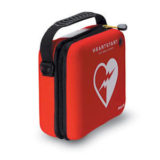
Standard semi-rigid carrying case for the HeartStart OnSite AED. The standard case is approximately 1″ inch thicker than the slim … Read More
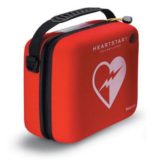
Standard semi-rigid carrying case for the HeartStart OnSite AED. The standard case is approximately 1″ inch thicker than the slim … Read More
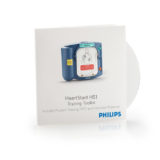
Philips HeartStart OnSite
Training Unit With Case – M5085A
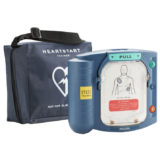
Philips HeartStart OnSite – M5066A
Your Complete Rescue-Ready Unit Includes:
A brand new Philips HeartStart Onsite AED unit with an 8-year warranty, 1 pair of adult Smart Pads, 1 battery with a 4-year warranty, a user manual, and a quick guide.
Additional Benefits for Packaging Include:

Your Complete Rescue-Ready Unit Includes:
A brand new Philips HeartStart Onsite AED unit with an 8-year warranty, 1 pair of adult Smart Pads, 1 battery with a 4-year warranty, a user manual, and a quick guide.
Additional Benefits for Packaging Include:
Philips HeartStart OnSite AED Reload Bundle
Philips HeartStart OnSite AED Reload Bundle This convenient bundle combines all your AED’s maintenance essentials into one bundle. Keep your … Read More
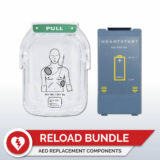
Philips HeartStart OnSite AED Reload Bundle This convenient bundle combines all your AED’s maintenance essentials into one bundle. Keep your … Read More